

How to Choose Blasting Equipment in Cyprus: Machine, Abrasive and Compressor
Abrasive blasting strips rust, old paint and dirt from steel, concrete and facades. A good finish comes down to three choices: the machine, the abrasive and the compressor that feeds them. This guide shows how to choose blasting equipment for your job, one choice at a time, using the blasting equipment we supply in Cyprus.
Pressure Pot or Blast Cabinet?
Blasting machines, also called sandblasting machines, come in two main types. The size of what you’re blasting decides between them.
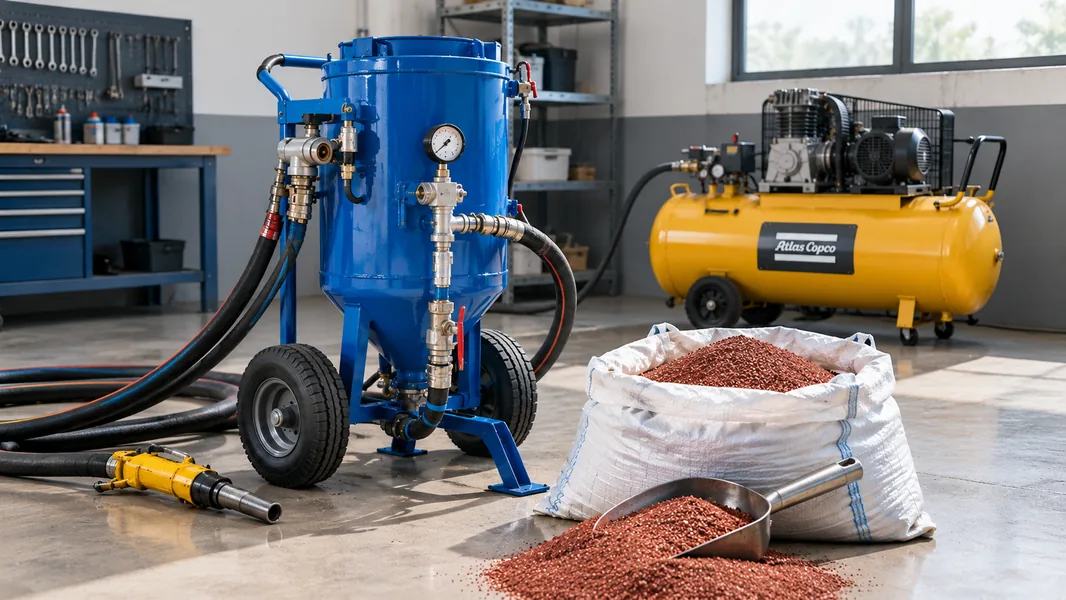
- Pressure pots hold abrasive in a sealed tank and push it down a hose to the nozzle. Our DBS-100/200 abrasive blasting machine has a 100 or 200 litre tank and cleans up to 37 m² an hour. It suits steel structures, bridges, tanks, pipework and concrete, and can clean steel to Sa 3, the highest grade.
- Remote-control pots add a deadman handle at the nozzle, so blasting stops the moment the operator lets go. The DBS-25 RC and DBS-50 RC use 25 or 50 litre tanks for smaller or more mobile jobs.
- Abrasive blast cabinets are sealed steel boxes for parts you can lift. Our ECO-Series suction blast cabinets come with a blast gun, a tungsten carbide nozzle and gloves. They connect to a dust collector or your workshop’s extraction.
You’ll find all three in our blasting machines range.
Choosing the Abrasive
Don’t reach for builder’s sand, even when it’s sold as sandblasting sand. Sand is crystalline silica, and blasting breaks it into fine dust that can cause silicosis and lung cancer. Australia’s WorkSafe Victoria has banned it for blasting since 2002. It lists garnet, crushed glass and aluminium oxide among the safer alternatives. Those are the three blasting media we stock:
| Abrasive | What it’s like | Best for |
|---|---|---|
| Garnet | Natural mineral, iron-free | Building exteriors, wet or dry blasting |
| Glass granulate | Angular glass, gentler than corundum | Fine work on wood and facades |
| Brown fused alumina | Very hard corundum (Mohs 9), long-lasting | Hard metals and alloys, jobs where you reuse the abrasive |
Glass granulate is angular, so it cuts harder than round glass beads but stays much gentler than alumina. Whichever you choose, check the grain size your machine takes. The DBS pots handle dry abrasives up to 3.5 mm. Garnet and glass granulate both work in pressure pots and injector blast cabinets.
How Much Air Does Your Nozzle Need?
The nozzle sets your air demand, and demand climbs fast as the opening gets bigger. Clemco’s published nozzle data, at 100 psi (about 7 bar), shows the jump:
Nozzles wear wider with use, and a worn nozzle uses more air. That’s why each starting point covers the next nozzle size up. On site, most blasting problems we’re called out to trace back to the air supply rather than the machine.
For the biggest jobs, the XAHS 237 delivers 500 cfm at up to 12 bar. Our guide to sizing a compressor for your tools explains how to work out the air for the rest of the site.
Keep the Air Dry
Compressed air carries moisture, and wet air makes abrasive clump and block the pot. In our experience, wet air causes more stoppages than worn parts. The DBS pots include a moisture separator. For long jobs or fine finishes, an air dryer between the compressor and the pot keeps the abrasive flowing. Drain the compressor and separator at the start of each day. Store abrasive sacks covered and off the ground, so they stay dry.
Nozzles, Hoses and Safety Gear
Nozzles are a consumable, so keep a spare on site. We stock nozzles, nozzle holders and other blasting accessories and parts to match our machines.
- Hose. Use hose rated for abrasive, and keep runs as short as the job allows.
- Operator protection. Blasters need a supplied-air helmet, gloves and protective clothing.
- Containment. Sheet off the area so dust and spent abrasive don’t spread to neighbours.
Hire or Buy Blasting Equipment?
For one-off jobs like a gate, a boat hull or a single building, most of our customers hire. Our blasting machines are available to hire or buy. We pair them with the right compressor and abrasive, so the whole setup comes from one supplier.
If blasting is a regular part of your work, buying the pot usually makes more sense. Keep a spare nozzle set and a stock of abrasive with it. Hire also lets you try an abrasive on a real job before committing to a full pallet.
Plan Your Blasting Setup With Psilos Group
Tell us the surface, the size of the job and the finish you need. We’ll match the machine, abrasive and compressor. A photo of the surface helps. Request a quote or call 7000 4994.
Frequently Asked Questions
What size compressor do I need for sandblasting?
It depends on the nozzle. A No. 4 nozzle uses about 81 cfm at 100 psi and a No. 6 about 196 cfm, so most site blasting needs a towable diesel compressor.
Can I use regular sand for sandblasting?
We don’t recommend it. Sand is crystalline silica, which can cause silicosis, so we supply garnet, glass granulate and brown fused alumina instead.
Can you sandblast wood?
Yes, with a gentle abrasive. Glass granulate is a common choice for fine work on wood and facades.
What’s the difference between a blasting machine and a blast cabinet?
A blasting machine, also called a pressure pot or sandblaster, sends abrasive down a hose for large or fixed surfaces. A blast cabinet is a sealed box for smaller parts.
What’s the difference between glass granulate and glass beads?
Glass granulate is angular, so it cuts harder. Round glass beads are gentler and leave a smoother finish.
Can blasting abrasive be reused?
Often, yes. Garnet, glass granulate and brown fused alumina can all be reused, depending on the job and how the abrasive is recovered.
Can you hire sandblasting equipment in Cyprus?
Yes. We hire and sell blasting machines, abrasives and compressors from Limassol. Call 7000 4994 to plan your setup.

How to Choose Blasting Equipment in Cyprus: Machine, Abrasive and Compressor
Abrasive blasting strips rust, old paint and dirt from steel, concrete and facades. A good finish co
What Size Air Compressor Do You Need for a Jackhammer, Breaker or Drill?
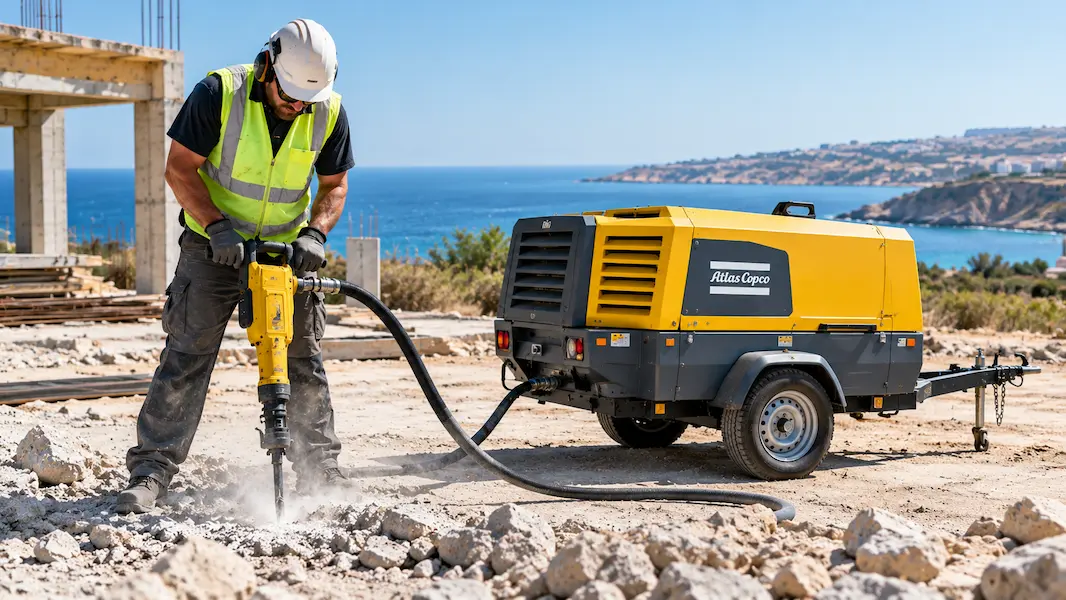
A jackhammer is only as strong as the air behind it. On a compressor that’s too small, it hits
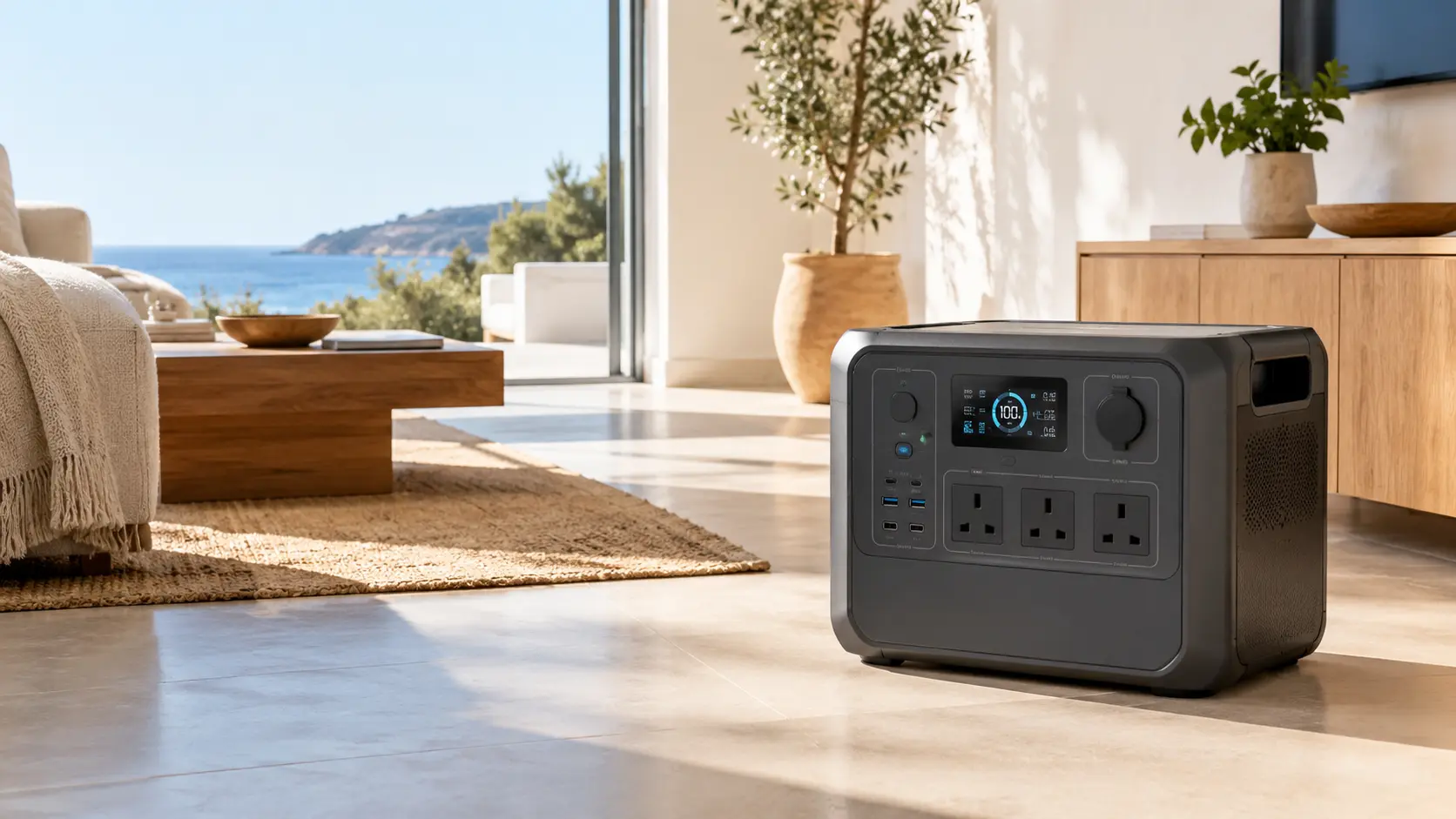
Battery power stations: a quiet backup-power alternative to a generator in Cyprus
A power cut in Cyprus rarely announces itself. One minute the lights are on, the next the fridge has